10 best Garage Conversion ideas in California
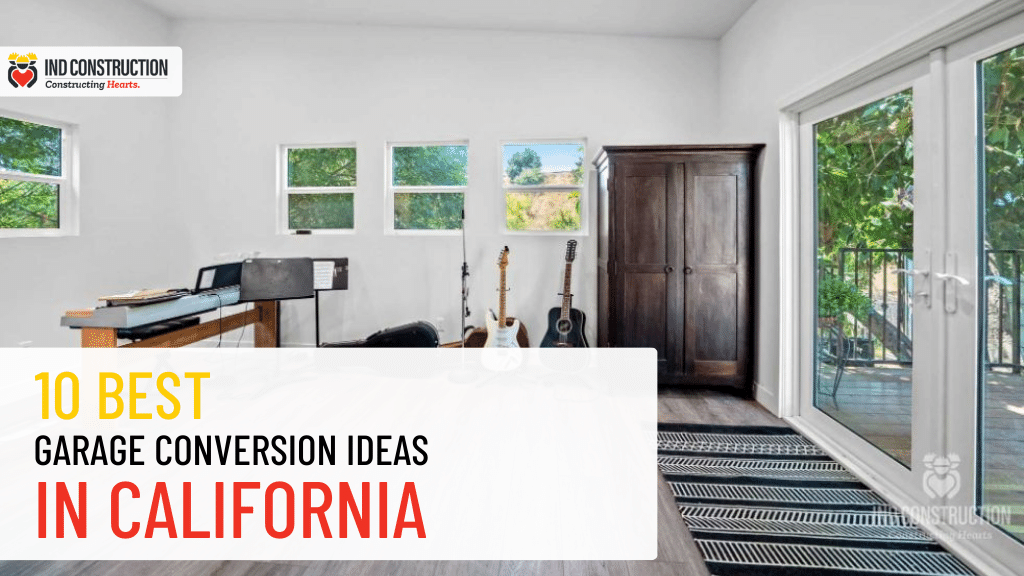
Converting a simple and dusty garage into a peaceful and sober place with a little planning and effort has a lot of potential that anyone can imagine. Such conversions are a great source of adding more living space to your existing area. The options are endless from guest rooms to kid’s play areas, movie theaters, home offices, and much more. One thing that homeowners need to remember is that in some cases, they wish to convert their garage into some other structural area or enhance their space. Then in most areas of California, such structural development is subject to special approvals and permissions from respective authorities. Any failure to comply with such approvals can cost homeowners a lot of hustle in terms of wastage of money as well as in terms of wastage of time. There are a number of creative ideas that homeowners can apply while converting their garages. You can simply scroll down to get inspired by a few radiant and amazing Garage transformations. 1. Family Play Area There are a lot of artistic and colorful ways in which homeowners can utilize their garages as better grooming and playing spaces for their kids. Nowadays, kids are developing their habits with more energy-consuming activities and are becoming more hyperactive. To fulfill this need, they require more space to exhale their energy in a more productive manner. In such separate and especially built spaces, kids can groom their imaginations in a better way while in confined homes we do not allow our kids to play openly because of the fear of breaking the glass of a window or hurting someone else with their toys.Homeowners can decorate their kid’s space with colorful shelving, plenty of comfortable sittings, huge desk space for reading and coloring, and much more. For converting your garage into kids playing space, be cautious about the floor materials as you cannot put slippery marbles or hardwood floors which can hurt your kids while playing. Therefore, it is recommended to put soft and cozy floor mats which can provide floor sitting as well as safety for your kids. 2. Home Office The recent Covid Pandemic has told us the importance of home working and we can observe now that most offices and workplaces are now providing more flexible working hours with an option to work from home with your ease. If you are working from home, or if you are a writer, painter, or freelancer, or in case you need to do an online as well as an offline meeting with your clients, you will definitely need a more peaceful space which is a little away from the home, kitchen and kid’s noises. For this, homeowners can easily convert their garage into their home-working space or an art studio. You can put a comfortable and professional table along with a set of chairs and if you are an artist then you can definitely set your painting or writing area as per your artistic imagination. Converting a garage into a working space requires a little more effort as you are going to convert a dusty place into a professional working area. Don’t rush, just make a list of items you need and start buying whatever you need to put in to make it a peaceful working space. 3. Home Library If you are a bibliophile or a bookworm and looking for some neat and clean peaceful surroundings to put on view your books collection then converting your garage into a home library is the best option to go with. You can renovate your garage with some natural textures such as wood, concrete, and stones to integrate your windows into bookshelves. You can also lighten up your space by covering only one or two garage sides with glass. This can allow natural day sunlight to highlight your area and give an esthetic and natural cozy environment to make your experience more soothing. 4. Double Garage Conversion If you have a two-car garage unit with electric and plumbing facilities then you can easily convert your garage into an awesome Accessory Dwelling Unit (ADU). As already available plumbing and electric facilities can allow you to build a separate kitchen and an attached bathroom with your space. Putting light-colored marble on floors can make your space look bigger and wide. This converted ADU can be used for any purpose such as a drawing room, office space, guest room, or for any other purpose. Before proceeding with the renovation of the double garage conversion, homeowners should deeply study the local law requirements for converting a garage vehicle area into a residential place. As some areas of California have very strict permit policies in this regard. 5. Investment Property As per the recent trends, property investors in California are purchasing homes with the strategy to convert their garages into separate residential Accessory Dwelling Units. As per the recent property laws in California, homeowners can rent out both main i.e. the main house and the ADU. Therefore, Investors are now more interested in generating two income streams from a single-family property. Also, the increase in property value gives investors additional profits over the long-term time period. 6. Gym or Fitness Studio As per the current living standards, lives are becoming busier day by day and people hardly find some time to fulfill their hobbies. Nowadays, people are more health conscious and they want to spend a part of their day in some healthy activity. The most popular trend for a garage conversion in 2022 is to make it a gym or yoga area so that the weights, exercise mats, treadmills, or other materials don’t need to share the space of the living room or bedroom. Also, for those persons who are more interested in giving exercise or yoga classes either as a part-time or full-time job, they can easily convert their garage into a fitness or yoga studio. 7. Music Studio For both developing and professional musicians, it is very important to have their own music
Building an ADU in California – Things to know
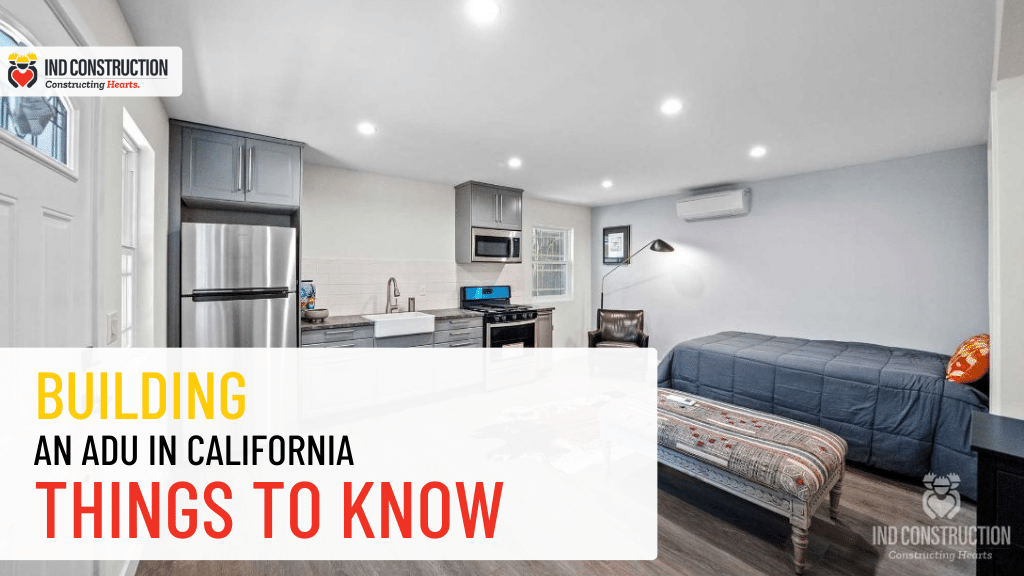
Are you planning to create a separate space along with your home to use as a workspace or guestroom, or maybe you are planning to rent it out to generate some extra income? If yes, then building an accessory dwelling unit (ADU) is the best option. ADU is basically an attached or totally separate residential unit with all the living facilities for a single person or more than one person. There are multiple benefits attached to an ADU unit but building it is quite technical and difficult. This is because every country or even every city in the country has its own restrictions, building laws, and special ADU regulations. Sometimes these laws are totally different from one city to another. Therefore, it is very important to keep in mind every single regulation, as failure to accommodate these while building an ADU can result in legal obligations, fines, and penalties which ultimately leads to the loss of a lot of money and time. Understanding and analyzing all the laws and regulations can be very confusing and irritating for homeowners while building an ADU unit. To facilitate your understanding and in order to give you some clarity, we are highlighting major ADU rules and regulations of California state which are essential to consider for building an Accessory Dwelling Unit (ADU). 1. Different types of Accessory Dwelling Units Let’s first take a look at the different types of Accessory Dwelling Units that homeowners can build as per their choice and convenience. Attached ADU – This type of Accessory Dwelling Unit basically allows homeowners to construct the unit attached to the walls of their main house. Detached ADU – Separated or detached ADU is a totally separate unit from the main house. This type is mainly constructed in the backyard. Garage Converted – Instead of building a new unit, homeowners usually convert their garage area into an ADU either of the same size as the garage or they can also expand its area to some extent as per their convenience. ADU Over Garage – Most popular type of ADU unit in California is to build a completely separate unit over the garage area. By doing so, homeowners can enjoy a separate ADU without compromising the garage area. Junior Accessory Dwelling Unit (JADU) – This is basically a smaller type of ADU. JADUs have normally more restrictions or limitations than ADUs. Such as, if homeowners wish to rent out the JADU, then it is compulsory to occupy the main residence. Also, a JADU should not be larger than 500 square feet. 2. Which Property is permitted for an ADU in California? The first and very obvious question that arises in the mind of every homeowner is whether their property is eligible for building an Accessory Dwelling Unit or not. So, here is the answer, any homeowner with a single-family home can build an ADU as soon as their property is in the residential zone or mixed-use zone. If building an ADU could increase your floor area ratio, then the maximum limit for building an ADU is 800 square feet. 3. Special ADU Ordinance and Laws by your area Jurisdiction Jurisdiction is basically the legal authority that decides property rules and regulations in your city. All the sets of regulations in order to build an ADU passed by your jurisdiction are known as “ADU Ordinance”. Some cities or areas have lenient ordinances in comparison to the state laws while some areas have aligned laws as per the ADU rules of the overall state with only minor additions or changes. If your city or area does not have any special set of regulations, then homeowners are obliged to follow the state regulations related to building an ADU. 4. Floor Area Ratio (FAR) The most common rule that can impact ADU construction in any area of California is the floor area ratio (FAR) rule. The mentioned rule does not restrict any homeowner from building an Accessory Dwelling Unit, however it applies conditions such as the height or length of the ADU unit which you can build. Therefore, it is essential for the ADU contractor to deeply study the local FAR rule for your area before starting the actual construction. 5. Permitted Quantity of ADUs in California The quantity of ADUs in California depends on the type of property you already have. As per the ADU regulations, there are two scenarios for single-family houses: if you have only one structured single-family house or if you have two or more detached houses on one single property, then it will be considered a single-family house, and not a multi-family house. In both scenarios, homeowners of single-family houses are permitted to build the following ADUs For multi-family houses, i.e., structures that include two or more residences such as an apartment building, then ADU regulations are different from single-family houses. For such types of properties, regulations are totally dependent on the area’s jurisdiction. As per the state laws, homeowners of multiple-family houses can build the following 6. Renting out Accessory Dwelling Unit Yes! One of the major reasons that homeowners are moving towards building Accessory Dwelling Units is the generation of some extra income by renting it out for shorter as well as for longer time periods. Depending on the ordinance issued by your area jurisdiction, homeowners can even rent out their ADUs for less than 30 days. As per the latest state laws for property management in California, the state has now allowed homeowners to rent out their main residence as well as their ADUs without the owner-occupancy rule. This ordinance is valid till Jan 01, 2025, but the state may extend this law further. This law is not applicable to the Junior accessory dwelling units, not in current times and not in the future. For JADUs, homeowners must live in the main residence in order to rent out their JADUs. 7. Utility requirements for New or Converted ADUs If new Accessory dwelling units are created within the existing property or
10 Common mistakes to avoid while remodeling your house

Are you planning for your home remodeling? It is always very exciting when you are planning to renovate your house or when it is done. But the major part after planning is the actual execution of your plan in which you start to deal with contractors, architects, subcontractors, dust, and noise. A single mistake while executing can easily convert your exciting process into a stressful activity. Some of the reconstruction mistakes are out of your control but, as a homeowner, you can do much more than you think to avoid major renovation mistakes.Home renovation always comes up with the stress of budgeting, planning, execution and with the pressure of turning out your renovation plan to be a successful implementation. In order to make your experience pleasant, you should be aware of the most common mistakes which usually homeowners and contractors make. Much can go wrong from setting up an unrealistic budget to appointing the wrong contractor if you do not plan well for your home remodeling. Below are the 10 most common mistakes which you should avoid while renovating your home: 1. Unrealistic Budget Setting up a budget for the home renovation is the first and very important step before starting the execution. This step involves listing down each and everything from accessories, material mobilization expenses, labor costs, furniture, and much more which needs to be incorporated while remodeling your space. If you underestimate your budget at the start, then it is highly possible that you will be stuck with a shortage of funds to buy necessary supplies or pay the daily labor wages in the middle of your renovation process. On the other hand, if the budget calculations are settled on the higher side at the start, then it is more likely that you will waste most of your money on irrelevant items and materials because with the overestimated budget it will be considered that you have a lot pending to spend as per your budget calculations. Therefore, it is recommended to work with a relevant home remodeling professional while setting up a budget and always make sure that you have added at least a 10% to 15% margin for miscellaneous expenses as there will be a lot of surprises when actual execution will start. 2. Selection of Contractor Your selected home remodeling contractor will have an important impact on your project. One of the major mistakes that most people make while selecting a contractor is that they choose the very first contractor they come across. All contractors have different visions, some are detail-oriented while some just want to get the job done as soon as possible. Therefore, in order to get the best renovation results it is recommended to take your time to select the best-suited contractor. Do proper background checks and ask for the sample work already done to get an idea of the contractor’s work quality. You can also ask your contractor to share a few of their client contacts so that you can double-check their executed projects. If any contractor hesitates to provide these details, then this is a red flag to back out and go for other options. Also, verify the license and other insurance documents before finalizing the contractor. 3. Mandatory Permits It is essential and very important to get the necessary permits to start home remodeling whether it is a project of a bigger scale or smaller scale. Never be too quick to start the renovation process without getting enough information on the required documentation, if you do so then it is possible that you will get stuck into legal obligations which will cost you a high amount of money in the form of fines and penalties and your excitement will go all in vain. If you do not have enough information on necessary permits in your area, then it is recommended to work with a qualified and professional local home remodeling contractor who can guide you with the necessary permits for your area before execution. 4. Purchase of Appliances at the End One of the biggest mistakes which homeowners make is the late purchase of appliances for the places where these gadgets need to be fitted in such as kitchens and bathrooms. It is always a smarter move while remodeling your space to select your appliances first and then construct your dimensions and cabinet layouts according to the size and shape of those appliances. If you first reconstruct your space and then go for the purchase of fitting, then you are left with only a few specific options as per your already constructed area. But if you want to choose from a wide variety available out there then you should choose your appliances and gadgets firsts and then go for the re-construction according to the size and shape of those fittings. 5. Purchase of Cheap materials “The sour taste of cheap quality lasts longer than the delightful taste of cheap price” keep this quote always in your heart while setting up your budget for house remodeling. It is very exciting at the start of the project to go for the low-price materials, but low price mostly comes up with a compromise on quality. Therefore, it is very important to select your renovation material with a keen eye so that there will be no compromise in quality. If your priority is to reduce the cost, then it is better to cut it from the areas which will have less impact on the overall renovation design. Don’t go for the cost cut from the areas which have a visible and staying impact on your design. 6. Selection of Wrong Architectural Elements The most common architectural home elements you will choose while home remodeling are your doors, floors, and windows. These materials are usually installed one time and it is not easy to replace them after every while. Therefore, it is very important to invest in high-quality materials. Also, the color and design of these items should be selected while keeping in mind