When your current home no longer fits your lifestyle, you may find yourself asking an important question: Should you remodel or move? For many Los Angeles homeowners, the answer depends on much more than the amount of space they need. In fact, your neighborhood, property value, family needs, budget, commute, home layout, and long-term plans can all influence the decision.
Los Angeles homeowners face a unique housing environment. Desirable neighborhoods can be difficult to leave, while buying another property can involve significant costs, time, and uncertainty. At the same time, remodeling can transform an outdated or inefficient house into a home that better matches the way you live.
Therefore, before putting your home on the market or starting a major renovation, it helps to compare both options carefully.
A well-planned remodeling project can improve functionality, comfort, storage, and appearance. On the other hand, moving may make more sense when your property has fundamental limitations that remodeling cannot reasonably solve.
Ultimately, the best decision depends on your specific property and priorities. However, understanding the advantages and challenges of each option can make the decision much easier.
Remodeling vs. Moving: What Should Los Angeles Homeowners Consider?
Before making a decision, consider how your current home performs in several important areas.
| Factor | Remodeling | Moving |
|---|---|---|
| Location | Keep your existing neighborhood | Requires finding a new location |
| Layout | Can improve inefficient spaces | New property may already have the desired layout |
| Space | Can add or reconfigure usable space | May provide more space immediately |
| Upfront Costs | Project costs vary based on scope | Down payment, closing, moving, and other costs may apply |
| Personalization | High level of customization | May require compromises |
| Construction Disruption | Temporary disruption during work | Moving creates its own disruption |
| Long-Term Value | Improvements may increase functionality and appeal | New property may better match future needs |
| Emotional Connection | Allows you to remain in your existing home | Requires leaving the current property |
| Timeline | Project length depends on scope and approvals | Finding, purchasing, and moving into another home takes time |
| Property Limitations | Existing site limits what can be changed | A different property may offer more flexibility |
This comparison shows why there is no universal answer. Instead, you should evaluate what is actually causing dissatisfaction with your current home.
When Remodeling May Make More Sense
If you already love your neighborhood, commute, schools, nearby amenities, or property location, remodeling can allow you to improve your home without giving up the place you enjoy living in.
Moreover, remodeling can be particularly attractive when your home’s problems are related to design rather than location.
For example, you might have a home that is in an excellent Los Angeles neighborhood but has an outdated kitchen, small bedrooms, limited storage, poor lighting, or an inefficient floor plan.
In that situation, moving may solve one problem while creating several others.
You Like Your Location
A great location can be difficult to replace.
Perhaps your home is close to work, family members, schools, restaurants, parks, shopping, or major transportation routes. Additionally, you may have spent years building relationships within the neighborhood.
Therefore, leaving simply because the house needs improvements may not be necessary.
Instead, remodeling can help you change the house while keeping the location.
For instance, a kitchen remodel could improve functionality and storage. Similarly, opening selected areas of the floor plan could make the home feel larger and more connected.
If your biggest complaint is the condition or configuration of the home, rather than the neighborhood itself, remodeling deserves serious consideration.
Your Home Has Untapped Potential
Many homes have space that homeowners do not use effectively.
For example, an outdated room may have limited functionality. A poorly designed hallway may consume valuable floor space. Likewise, an underused garage, attic, basement, or other area may offer possibilities depending on the property’s structure, zoning, building requirements, and project goals.
Consequently, you should evaluate your existing property before assuming that you need a larger house.
A professional remodeling plan can identify opportunities to improve the way your home works.
In addition, remodeling can combine several improvements into one coordinated project. A homeowner might update the kitchen while improving storage, lighting, flooring, and the connection between living areas.
As a result, the home can feel significantly different without requiring a move.
Your Family Needs More Functional Space
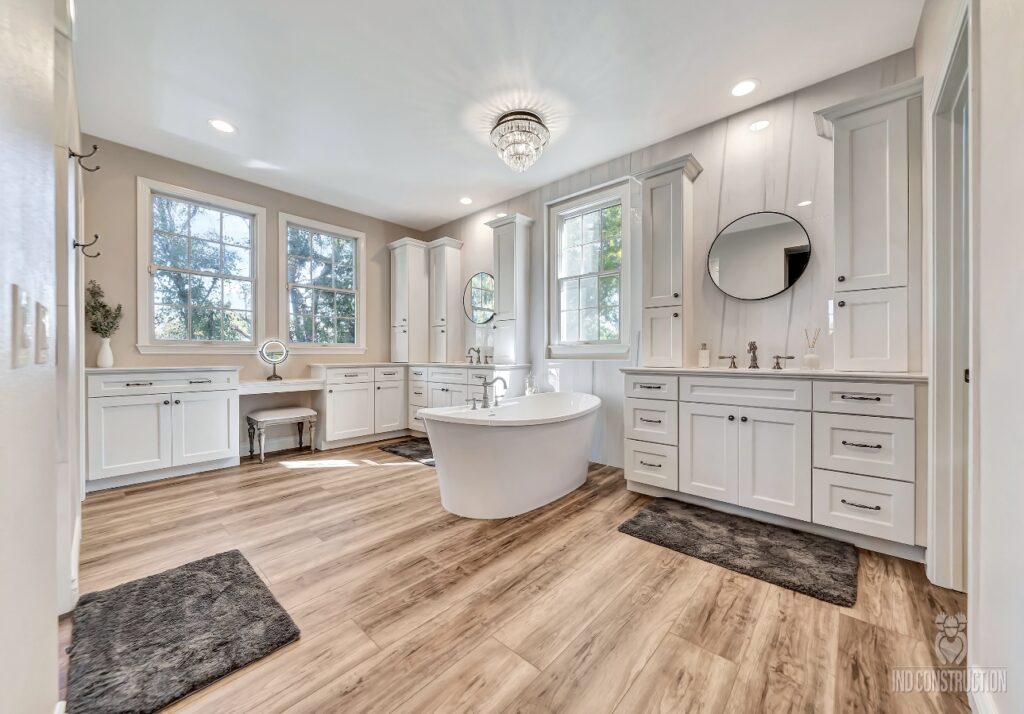
Sometimes homeowners believe they need a bigger house when they actually need better space.
For example, a family may have enough total square footage but lack:
- Practical storage
- A functional kitchen
- Comfortable bedrooms
- A dedicated home office
- Flexible living areas
- Better indoor-outdoor connections
- More usable common areas
- Improved bathroom functionality
Therefore, adding or reconfiguring space may address the underlying problem.
A remodeling project can potentially create more usable space by changing how existing rooms connect to one another.
However, homeowners should evaluate structural requirements, permitting, zoning, and building-code considerations before assuming that every desired change will be possible.
You Want to Customize Your Home
Another significant advantage of remodeling is customization.
When you purchase another home, you may find a property with the right number of bedrooms but the wrong kitchen. Alternatively, you might find a beautiful kitchen but an inconvenient floor plan.
In contrast, remodeling allows you to focus on the features that matter most to your household.
For example, you may want:
- A larger kitchen island
- More kitchen storage
- A dedicated home office
- Modern bathrooms
- Improved lighting
- Built-in storage
- Better entertaining areas
- A more open living arrangement
- Updated flooring
- Improved energy efficiency
Of course, the final design depends on the existing property and project requirements. Nevertheless, customization can be one of the strongest reasons to remodel.
When Moving May Be the More Practical Option
Although remodeling can solve many problems, it cannot solve every problem.
Sometimes the property itself creates limitations that are difficult or impractical to overcome through construction.
For example, your home may be located too far from work, have a lot that does not support the space you need, or lack the fundamental characteristics required for your long-term plans.
In those circumstances, moving may deserve consideration.
The Location No Longer Works for You
Even an excellent home can become inconvenient if your circumstances change.
Perhaps your workplace changed. Maybe your family needs to be closer to relatives. Alternatively, you may want to live closer to public transportation, schools, parks, or other amenities.
In such cases, remodeling the house may not address the real problem.
After all, a beautiful kitchen cannot shorten a difficult commute.
Therefore, if location is the primary reason you are unhappy with your home, compare the costs and benefits of moving before investing heavily in remodeling.
You Need Significantly More Space
Sometimes your household needs substantially more space than the property can reasonably provide.
For example, a growing family may need additional bedrooms, larger common areas, or more outdoor space.
Although an addition or major renovation might be possible, the project could become increasingly complex as the scope grows.
Therefore, compare the potential remodeling requirements with available properties that already meet your needs.
This does not automatically mean moving is the better option. Instead, it means you should understand the full scope of the remodeling project before making a decision.
The Property Has Major Limitations
Every property has physical limitations.
Lot size, structural conditions, existing layouts, setbacks, zoning requirements, access, and other factors can affect what you can change.
Consequently, homeowners should not assume that a desired addition or structural modification will automatically receive approval.
Before committing to a major project, it is important to evaluate the property and understand applicable requirements.
You Are Already Considering a Major Relocation
If you are planning to move to another city or substantially change your lifestyle, remodeling may not be the most practical solution.
For example, if you expect to relocate within a relatively short period, a large renovation could provide less personal benefit than a homeowner who plans to remain in the property for many years.
However, the decision should still account for the specific project, expected costs, personal priorities, and potential market considerations.
Remodeling Can Be About More Than Appearance
Many homeowners associate remodeling with cosmetic improvements such as paint, flooring, countertops, and cabinets.
However, a comprehensive remodeling project can address functionality as well.
For example, remodeling may improve:
- Traffic flow
- Storage
- Lighting
- Room relationships
- Kitchen functionality
- Bathroom usability
- Indoor-outdoor connections
- Accessibility
- Energy performance
- Overall comfort
Therefore, remodeling should not necessarily be viewed as simply making an old house look newer.
Instead, the goal can be to create a home that works better for your current lifestyle.
Think About Your Long-Term Plans
One of the most important questions is: How long do you plan to stay in the home?
If you expect to remain for many years, remodeling may allow you to create a home that supports your future needs.
For example, a young family might prioritize additional bedrooms and flexible living areas. Later, the same homeowners may value accessibility, first-floor living, or easier maintenance.
Consequently, long-term planning can help you avoid making short-term decisions that create additional costs later.
Before starting construction, think about how your household could change over the next five, ten, or even fifteen years.
Consider the Financial Side of Remodeling
Cost is obviously an important consideration.
However, homeowners should look beyond the construction estimate itself.
A remodeling budget may include design, planning, permits, materials, labor, structural work, fixtures, finishes, and other project-related expenses.
Furthermore, unexpected conditions can affect a renovation once work begins.
For that reason, homeowners should establish a realistic budget and understand the expected scope before construction starts.
You should also consider how the renovation fits into your overall financial plans.
Rather than asking only, “How much will the remodel cost?” ask:
What will I gain from the remodel, and how does that compare with the total cost and disruption of moving?
Moving Has Costs Too
Moving can sometimes appear simpler because you avoid construction.
Nevertheless, purchasing another property can involve numerous expenses and logistical challenges.
Depending on your circumstances, you may need to consider:
- Purchase-related costs
- Financing expenses
- Closing costs
- Moving expenses
- Repairs or upgrades to the new home
- Storage
- Temporary housing
- New furniture or appliances
- Time spent searching for a property
Additionally, the new home may not be perfect.
You could still need to remodel the kitchen, update bathrooms, replace flooring, improve storage, or modify the layout after moving.
Therefore, compare the complete cost of moving with the complete cost of remodeling rather than comparing only the renovation estimate with the home’s purchase price.
Consider the Emotional Value of Your Home
Financial calculations are important, but they are not the only consideration.
A home may have emotional value because of family memories, neighborhood connections, personal history, or years of investment.
For many homeowners, staying in the same house while improving it provides an attractive combination: they can keep the location they love while adapting the property to their current needs.
Of course, emotional attachment should not replace practical planning. Nevertheless, it can be one factor in the overall decision.
Remodeling Can Preserve What You Already Love
Sometimes a home has characteristics that are difficult to recreate.
Maybe you love the natural light, backyard, mature landscaping, street, views, architectural character, or neighborhood.
A remodel can potentially preserve these features while addressing the aspects that no longer work.
For example, instead of leaving a neighborhood because the kitchen feels outdated, you could explore a kitchen renovation.
Similarly, instead of moving because the living areas feel disconnected, you could investigate whether the floor plan can be improved.
What About Property Value?
Home improvements can influence a property’s appeal and functionality. However, homeowners should avoid assuming that every remodeling project will return its full cost.
Market conditions, neighborhood characteristics, project quality, buyer preferences, and the type of improvement can all affect the outcome.
Therefore, if resale value is important to you, consider both your personal goals and the broader characteristics of your local housing market.
A renovation that makes the home substantially more comfortable for you may still be worthwhile even if you do not recover every dollar through future resale.
Ask These Questions Before Deciding
Before choosing between remodeling and moving, ask yourself:
1. Do I Like My Neighborhood?
If you strongly prefer your current location, remodeling may allow you to improve the home without giving up that advantage.
2. What Exactly Do I Dislike About My Home?
Make a detailed list.
Is the problem:
- Size?
- Layout?
- Kitchen?
- Bathrooms?
- Storage?
- Lighting?
- Condition?
- Outdoor space?
- Location?
Identifying the actual problem is essential.
3. Can Remodeling Solve the Problem?
Some problems can be addressed through design and construction.
Others cannot.
For example, an inefficient kitchen may be remodeled, while an unsuitable location cannot be changed.
4. How Long Will I Stay?
The longer you plan to remain, the more important your long-term satisfaction may become.
5. What Is My Realistic Remodeling Budget?
Get a clear understanding of the likely project scope before making assumptions.
6. What Would Moving Really Cost?
Consider more than the purchase price of another home.
7. Am I Prepared for Construction?
Remodeling can temporarily affect your daily routine. Depending on the project, you may need alternative arrangements for cooking, bathing, sleeping, or accessing parts of the home.
A Simple Remodeling vs. Moving Decision Framework
You can use the following framework to organize your thinking:
| Question | If Your Answer Is “Yes” | What It May Suggest |
|---|---|---|
| Do you love your neighborhood? | Yes | Explore remodeling |
| Is the primary issue the home’s layout? | Yes | Explore remodeling |
| Could additional space solve your problem? | Yes | Compare addition/remodel options |
| Does the location no longer work? | Yes | Explore moving options |
| Does the property have significant physical limitations? | Yes | Compare moving with major renovation |
| Do you plan to stay long term? | Yes | Remodeling may align with long-term goals |
| Do you need substantially different property characteristics? | Yes | Compare alternative properties |
| Is your home generally in good condition? | Yes | Remodeling may be worth investigating |
| Would a renovation require changes beyond your budget? | Yes | Compare the full cost of moving |
| Are you comfortable with construction disruption? | Yes | Remodeling may be more practical |
This framework does not provide a universal answer. Instead, it helps you identify which questions deserve more attention.
Start With the Home, Not Just the Problem
One common mistake is deciding on a solution before understanding the property.
For example, a homeowner may decide, “I need to move because my house feels too small.”
However, a closer evaluation may reveal that the home has unused space, poor storage, or an inefficient layout.
Likewise, another homeowner may assume, “I can remodel everything.”
Yet structural, zoning, budget, or site limitations may make the proposed project impractical.
Therefore, start by evaluating the property and defining the problem.
Work With a Clear Remodeling Plan
If you decide to explore remodeling, planning becomes especially important.
A successful project generally begins with understanding your goals, property conditions, desired improvements, budget, and applicable requirements.
Then, the design can be developed around those priorities.
For Los Angeles homeowners, this process can be particularly important because project requirements can vary depending on the property and proposed work.
Consequently, you should avoid relying on generic assumptions about what can be built or changed.
Remodeling Can Create a More Functional Los Angeles Home
Los Angeles homes come in many architectural styles, sizes, ages, and layouts.
As a result, remodeling strategies vary considerably from one property to another.
One homeowner may need a kitchen transformation. Another may need an addition. Someone else may need better storage or a more functional floor plan.
Therefore, the right remodeling strategy should respond to the property rather than follow a one-size-fits-all approach.
A thoughtful renovation can help align your home with how you actually live.
Explore Your Home Remodeling Options
If you are considering whether to remodel or move, the first step is to understand what your current property can realistically become.
A professional evaluation can help you identify potential improvements, understand project possibilities, and determine whether remodeling aligns with your goals.
If you want to explore your options, you can learn more about home remodeling services and discover how different improvements can transform an existing property.
Additionally, you can explore more home remodeling ideas and resources to learn about potential design approaches, renovation considerations, and home improvement opportunities.
When you are ready to discuss your specific property, you can contact IND Construction to talk about your remodeling goals.
Final Thoughts: Remodel or Move?
The decision to remodel or move is ultimately a personal one, but it should be based on a clear understanding of your property, lifestyle, budget, and long-term goals.
If you love your Los Angeles neighborhood but dislike your home’s layout, condition, storage, or functionality, remodeling may provide a way to improve the property while staying where you already want to live.
On the other hand, if your location no longer fits your lifestyle, you need substantially different property characteristics, or your home’s physical limitations make your desired improvements impractical, moving may deserve consideration.
Most importantly, do not make the decision based on one factor alone.
Instead, compare the complete picture.
Consider the cost, timeline, disruption, potential improvements, property limitations, neighborhood, and your plans for the future. Then, evaluate whether your current home can realistically become the home you want.
In many cases, the question is not simply “Should I remodel or move?”
The better question is:
“Can my current Los Angeles home be transformed into the home I need?”
Answering that question can help you determine whether your next step should involve a remodeling plan, further property evaluation, or a search for a different home.
Frequently Asked Questions
Is it cheaper to remodel or move?
There is no universal answer because both options involve different costs. Remodeling expenses depend on the project’s size, materials, labor, design, permits, and existing property conditions. Moving can involve purchasing costs, closing expenses, moving expenses, financing costs, and potential renovations to the new property. Therefore, homeowners should compare the complete costs of both options.
How do I know whether my Los Angeles home can be remodeled?
The answer depends on the existing structure, lot, layout, zoning requirements, building regulations, project scope, and other property-specific factors. A professional evaluation can help determine what improvements may be practical for your property.
Should I remodel if I love my neighborhood?
If you enjoy your neighborhood and the primary problems involve your home’s layout, appearance, storage, or functionality, remodeling may be worth exploring. It can allow you to improve the home while remaining in a location you already enjoy.
Is moving better than remodeling for a growing family?
It depends on how much additional space your family needs and what your existing property can accommodate. A smaller expansion or layout improvement may address your needs, while a property with fundamental space limitations may require a different solution. Comparing both options can help clarify the decision.
Can remodeling increase my home’s value?
Some improvements can increase a home’s appeal, functionality, and marketability. However, the financial return varies depending on the project, neighborhood, market conditions, construction quality, and buyer preferences. Homeowners should consider both personal benefits and potential resale considerations.
How long does a home remodeling project take?
The timeline varies significantly based on project size, design complexity, permitting, material availability, construction requirements, and property conditions. A small renovation may take considerably less time than a whole-home remodel or major addition.
Should I remodel before selling my Los Angeles home?
That depends on the condition of the property, your goals, budget, expected timeline, and local market considerations. Not every renovation is necessary before selling. Therefore, homeowners should evaluate whether an improvement is likely to provide enough benefit to justify its cost and disruption.
What should I remodel first?
Prioritize improvements based on your household’s biggest problems. For example, if your kitchen creates daily frustration, improving the kitchen may make sense. If the floor plan limits how you use the home, layout improvements may deserve greater attention. A professional evaluation can help identify priorities.
Can I add more living space instead of moving?
Depending on the property, an addition or other remodeling strategy may create additional usable space. However, feasibility depends on site conditions, existing structures, zoning, building requirements, design, and project scope. You should evaluate these factors before assuming an addition is possible.
How should I start planning a home remodel?
Start by identifying the problems you want to solve and the improvements you want to make. Then, establish your priorities and budget. After that, evaluate the property and discuss your goals with a qualified remodeling professional who can help you understand the project’s possibilities and requirements.
Where can Los Angeles homeowners learn more about remodeling?
Homeowners can explore IND Construction’s home remodeling services for information about potential remodeling solutions. You can also browse remodeling ideas and resources or contact IND Construction to discuss your specific project.
Ready to Explore What Your Home Could Become?
Moving is not the only way to get a home that better fits your lifestyle. Likewise, remodeling is not automatically the right solution for every property.
The best starting point is understanding what your existing home can realistically offer.
If you love your Los Angeles location but want a better kitchen, improved layout, more storage, additional living space, or a more functional home, remodeling may provide an opportunity to transform the property around your needs.
Explore home remodeling services to learn more about potential solutions, read the latest remodeling resources for additional ideas, or contact IND Construction to discuss your home’s possibilities.